For men, accessories should be mostly utilitarian rather than decorative. Every accessory should serve a practical purpose.
Essentials
Watch
- Tells the time
- May include useful features such as a date, timer, or alarm
Sunglasses / Glasses
- Improve vision (prescription glasses)
- Protect your eyes from UV rays and reduce glare (sunglasses)
Belt
Everything Else
Jewellery such as bracelets, necklaces, multiple rings, and other decorative accessories is optional. For a masculine minimalist style, they are unnecessary and can easily make an outfit feel overdone.
Watch
Do You Really Need Watch?
Not necessarily. A smartphone tells the time just as well. A watch is a convenience, not a necessity.
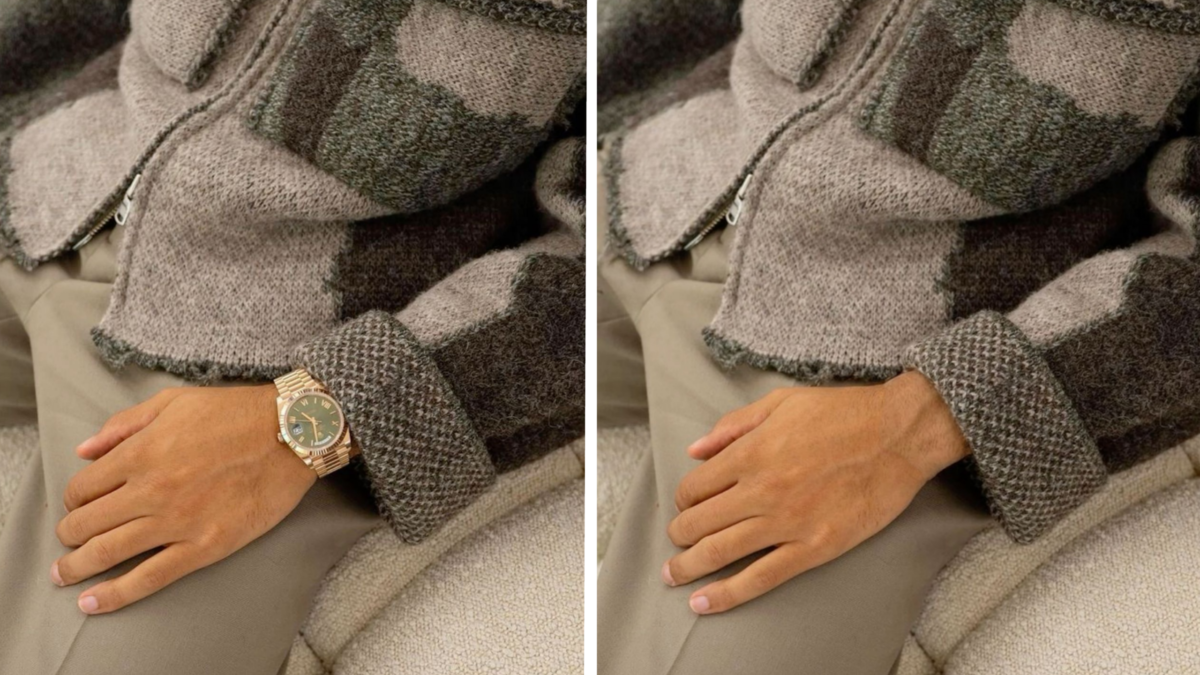

Small detail. Big difference.
A simple, well-chosen watch can complete an outfit and express your personal style, but it’s the cherry on top, not the foundation.
Even the most expensive luxury watch won’t compensate for a receding hairline, fat body and ugly face.
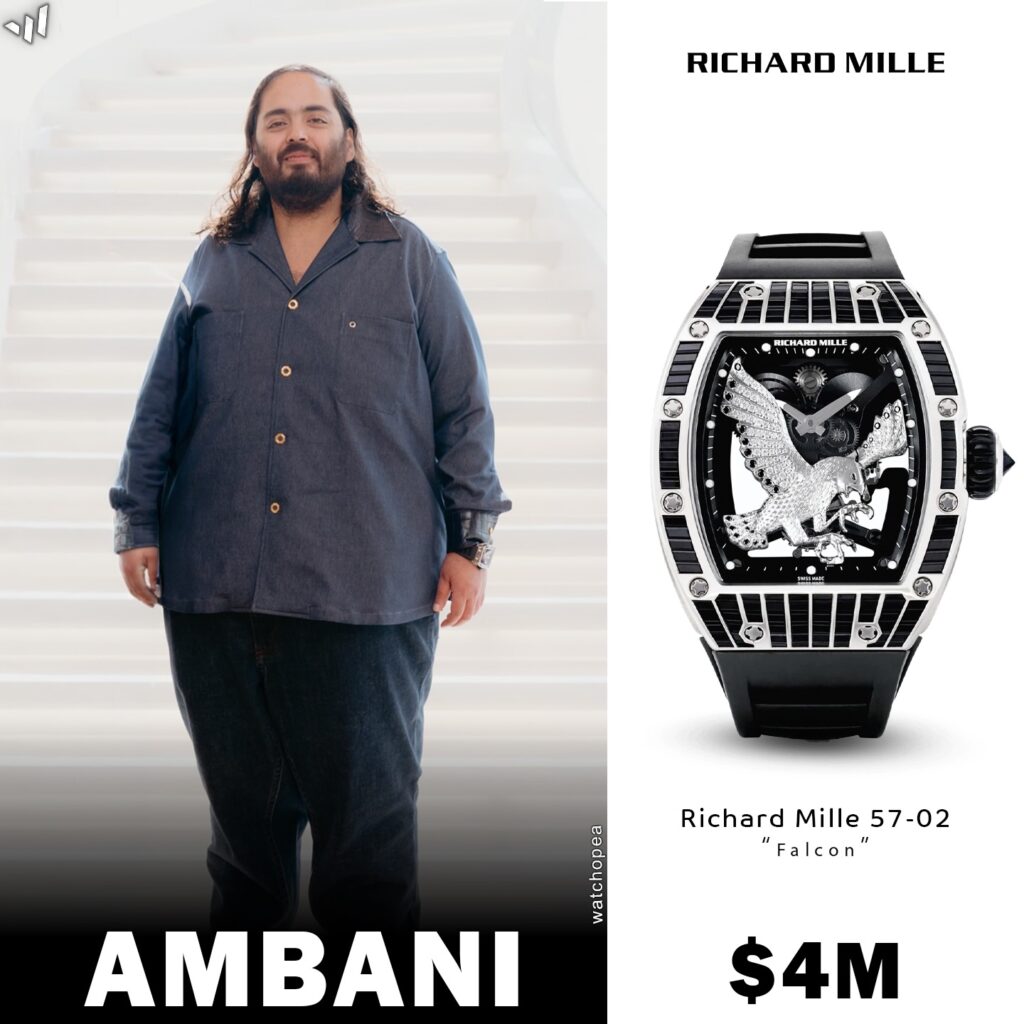
Today, a watch is one of the few socially accepted forms of jewellery for men. For many people, especially in the luxury market, it has become a symbol of status, taste, craftsmanship, and success. People don’t buy a $20,000 watch because they need to know the time.
“It’s a Patek Philippe. It’s incredibly accurate. Every time you look at it, it tells you exactly how rich you are.”
Tom Wambsgans, HBO’s Succession
Types of watches
| Watch Type | Casual | Smart Casual | Business Casual | Formal | Sport |
| Everyday Sport Watches | + | + | + | + | + |
| Dive | + | + | + | ± | + |
| Dress | ± | + | + | + | − |
| Field | + | + | ± | − | + |
| GMT | + | + | + | ± | ± |
| Chronograph | + | + | ± | − | ± |
| Pilot | + | ± | ± | − | ± |
| Digital | ± | − | − | − | + |
| Smartwatch | ± | ± | ± | − | + |
+ Recommended
± Acceptable
− Not recommended
Everyday Sport Watches
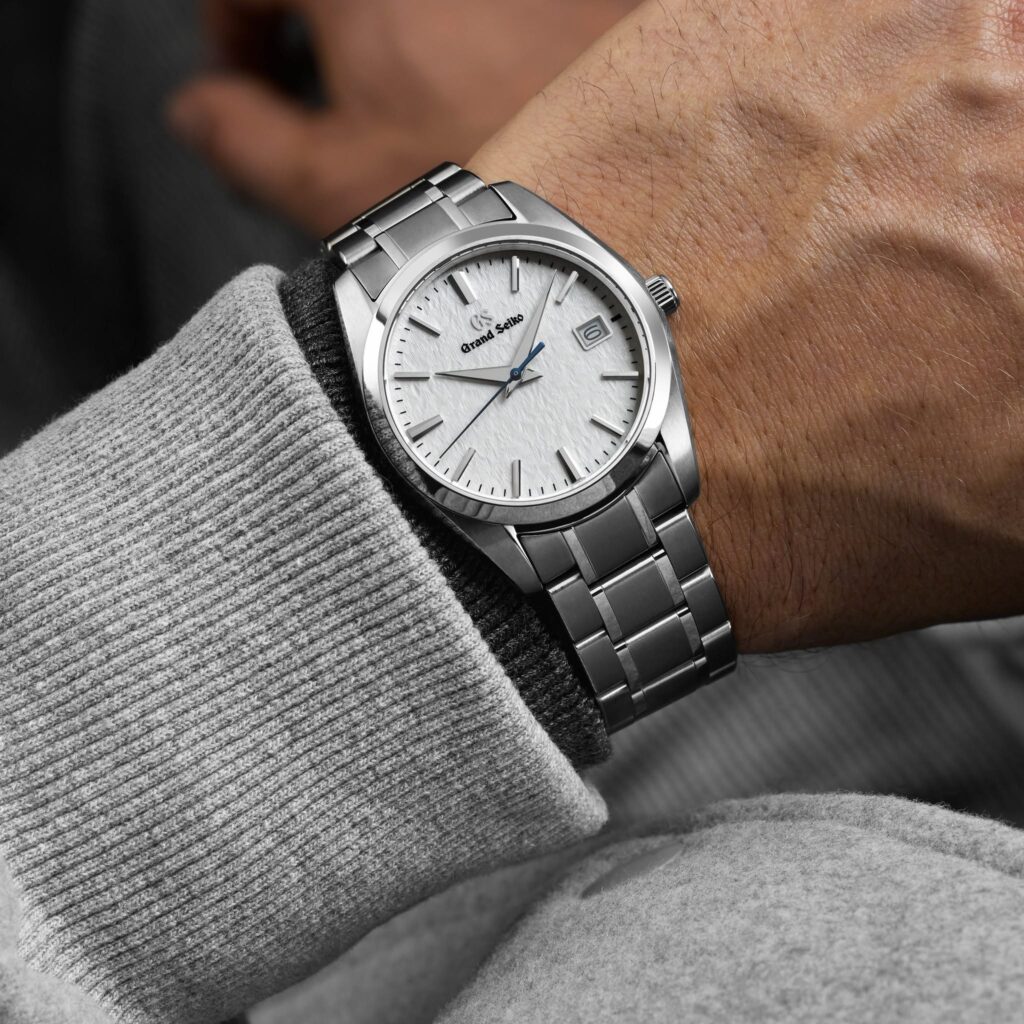
If you could own only one watch, choose a versatile everyday watch. It will suit almost every outfit and occasion, making it the best all around choice.
Pros
- Works with almost every outfit
- Suitable for most occasions
- Timeless design that doesn’t go out of style
- Comfortable for daily wear
- Easy to pair with different straps
Cons
- Fewer tool features
- Can look too plain
Examples:
| Watch | Approx. Price (USD) |
|---|---|
| Seiko 5 SNKL23 | ~$100 |
| Citizen The Citizen AQ4091-56M | ~$2,500 |
| Grand Seiko SBGX261 | ~$2,300 |
| Omega Aqua Terra | ~$6,500 |
| Rolex Explorer 36 | ~$8,000 |
Dive Watch
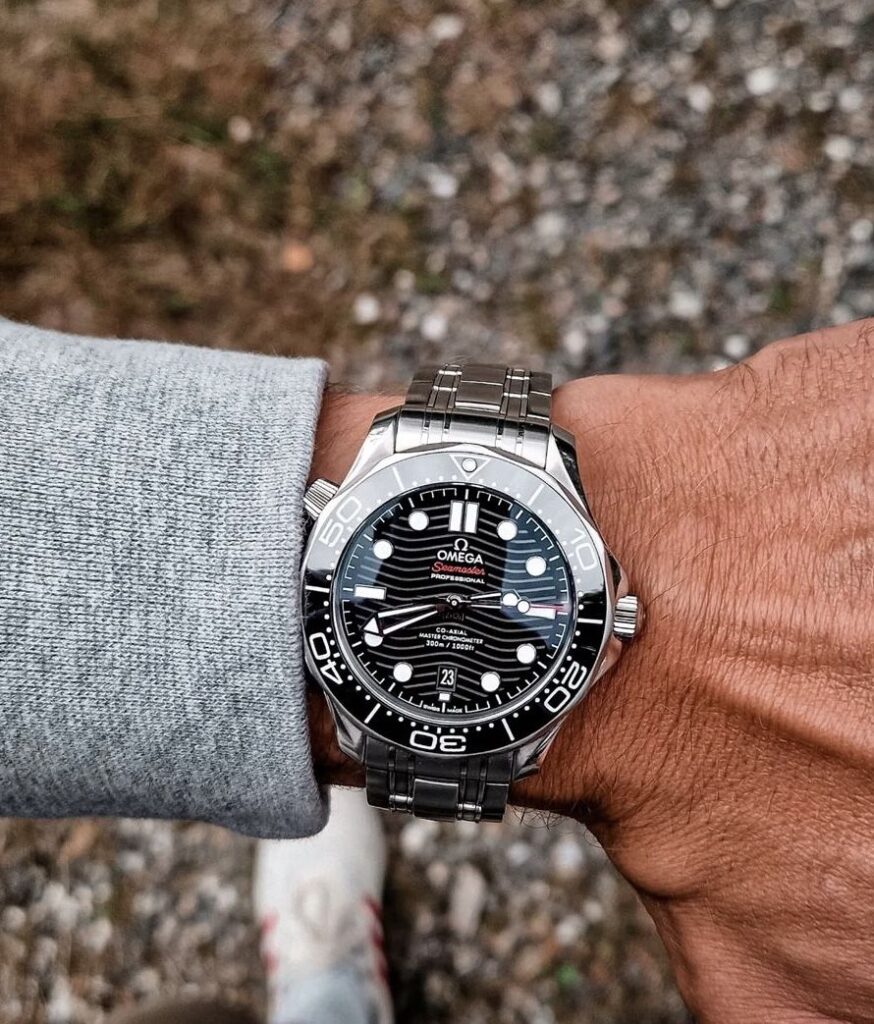
A rugged sports watch with a rotating bezel and high water resistance.
Pros
- Eye-catching design
- Highly durable
- Excellent water resistance
- Versatile
- Great everyday watch
Cons
- Sportier appearance
- Usually thicker and larger
- Limited options for smaller wrists
| Dive Watch | Approx. Price (USD) |
| Casio Duro MDV106 | $100 |
| Citizen Promaster Diver | $300 |
| Seiko Prospex SPB143 | $1,000 |
| Tudor Black Bay 58 | $4,000 |
| Omega Seamaster Diver 300M | $6,000 |
| Rolex Submariner | $9,000 |
How to choose a watch?
Choose the right size
Before choosing a watch, measure your:
- Wrist circumference (girth)
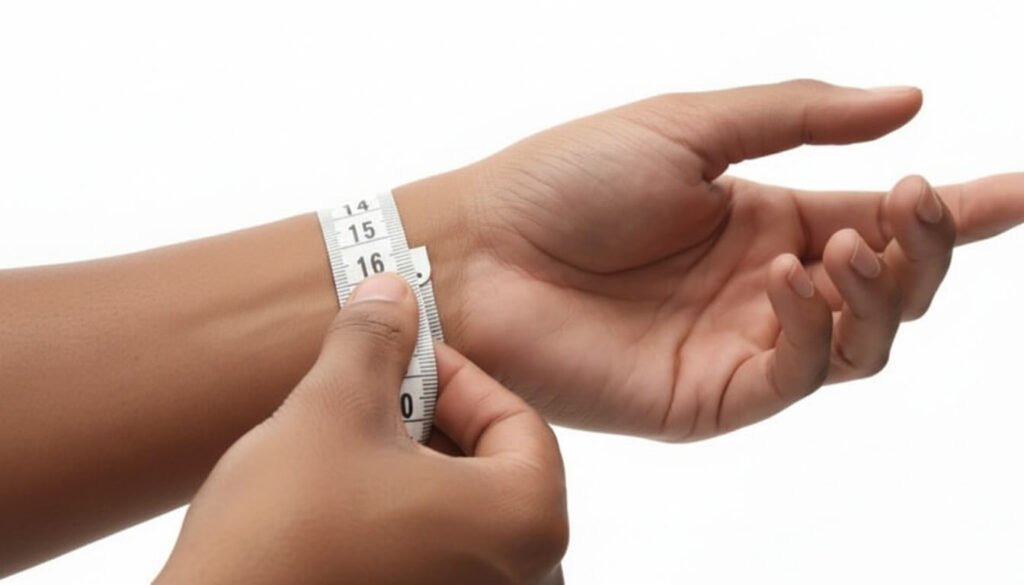
Measure the circumference of your wrist at its narrowest point, just above the wrist bone, using a flexible measuring tape.
- Wrist width
Often overlooked but just as important as wrist circumference.
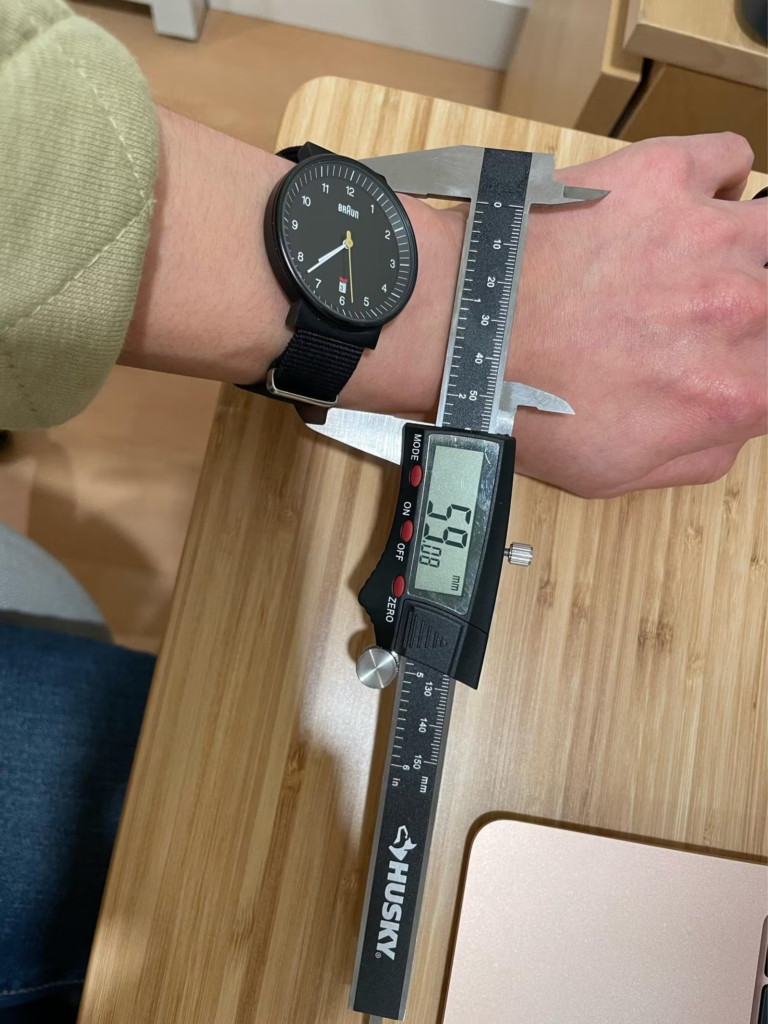
Measure the width of your wrist from side to side at the point where you wear your watch. This is the most important measurement for determining the ideal lug-to-lug length.
Then use these measurements to choose the appropriate:
- Case diameter
- Lug-to-lug
- Thickness
Case Diameter
The width of the watch case, measured across the case excluding the crown. It is one of the most important factors in how a watch fits and looks on your wrist.
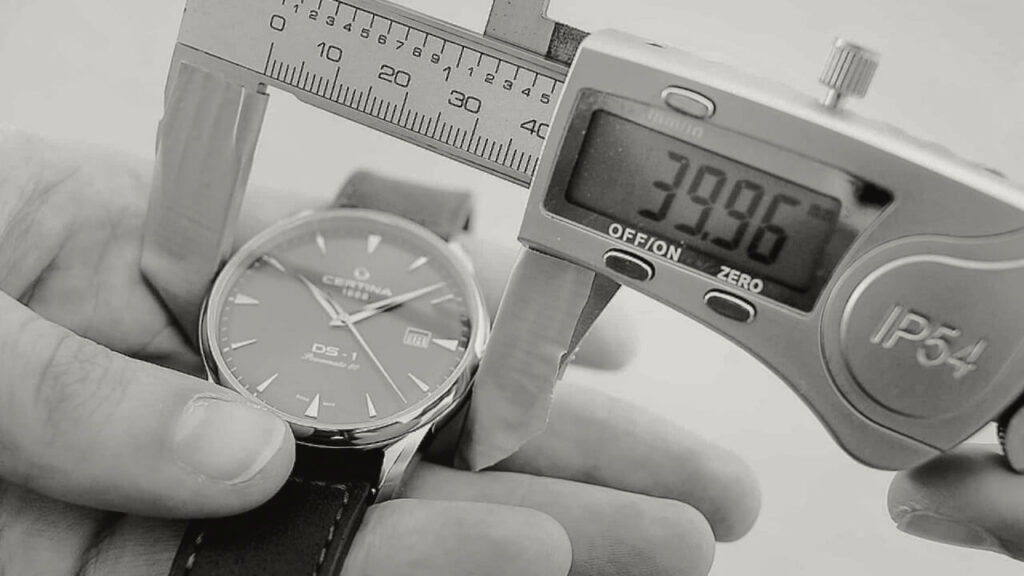
Historically:
- 1940s to 1970s: 34 to 36 mm was standard for men’s watches.
- 1990s to 2010s: Large watches (42 to 48 mm) became fashionable.
- Today: Many enthusiasts have returned to 36 to 39 mm because they look more balanced and timeless.
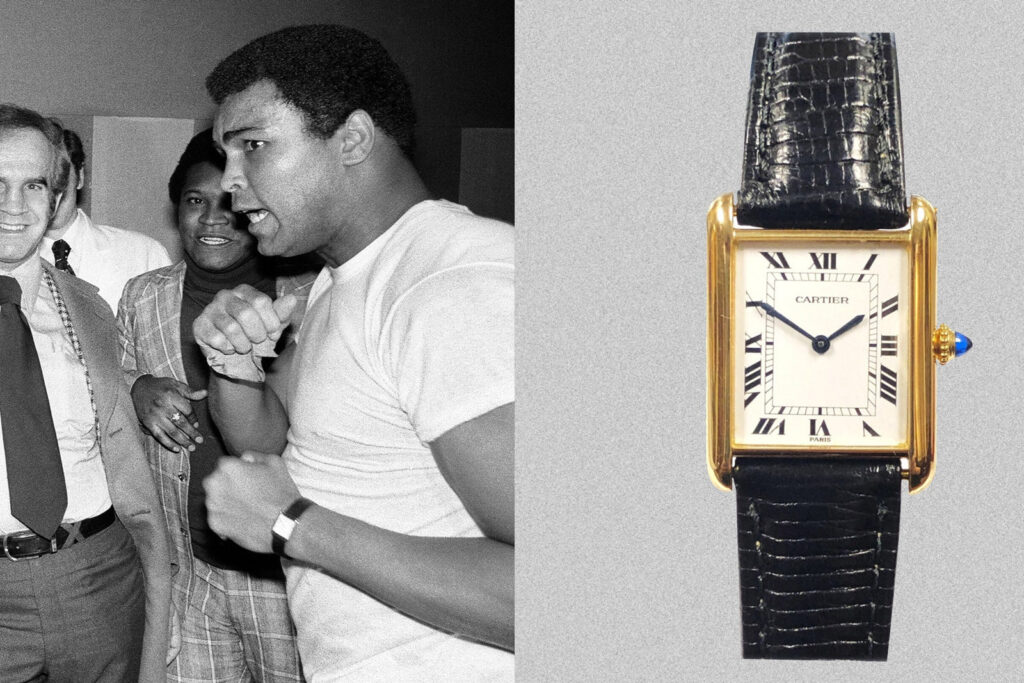
A small watch creates a vintage-inspired look.
When in doubt, choose slightly smaller rather than larger. Smaller watches tend to age better stylistically and are often considered more elegant.
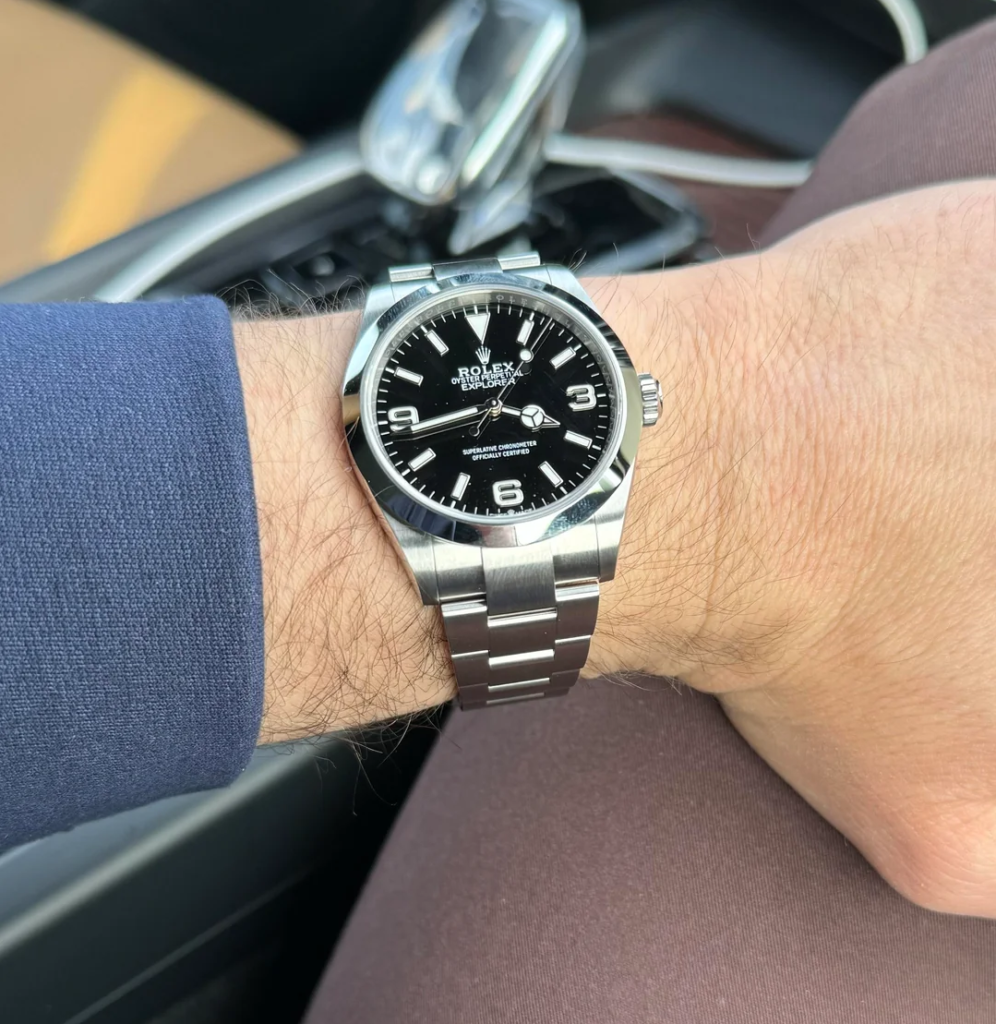
| Wrist Circumference | Recommended Case Size |
| Under 15 cm (6.0″) | 34 to 36 mm |
| 15 to 16 cm (6.0–6.3″) | 36 to 38 mm |
| 16 to 17 cm (6.3–6.7″) | 38 to 40 mm |
| 17 to 18 cm (6.7–7.1″) | 39 to 41 mm |
| 18 to 19 cm (7.1–7.5″) | 40 to 42 mm |
| Over 19 cm (7.5″+) | 42 mm+ |
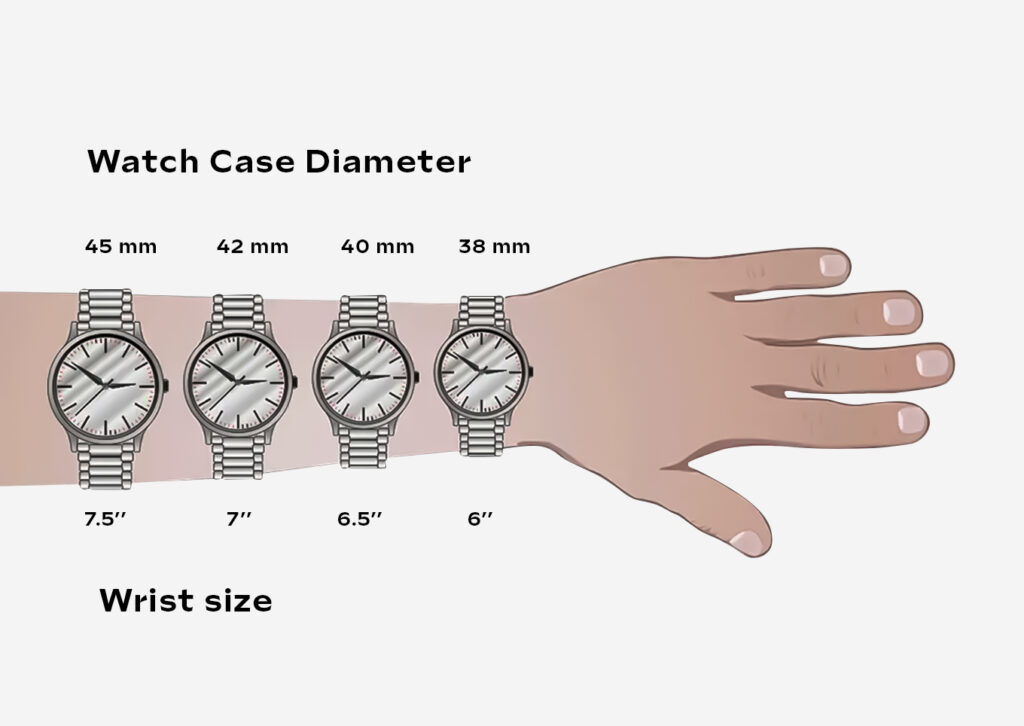
Lug-to-Lug
The distance from the tip of the top lug to the tip of the bottom lug. It determines how well a watch fits your wrist and is often more important than case diameter.


Ideal: Lug-to-lug is 2 to 5 mm shorter than your wrist width.
Maximum: Lug-to-lug should not exceed your wrist width.
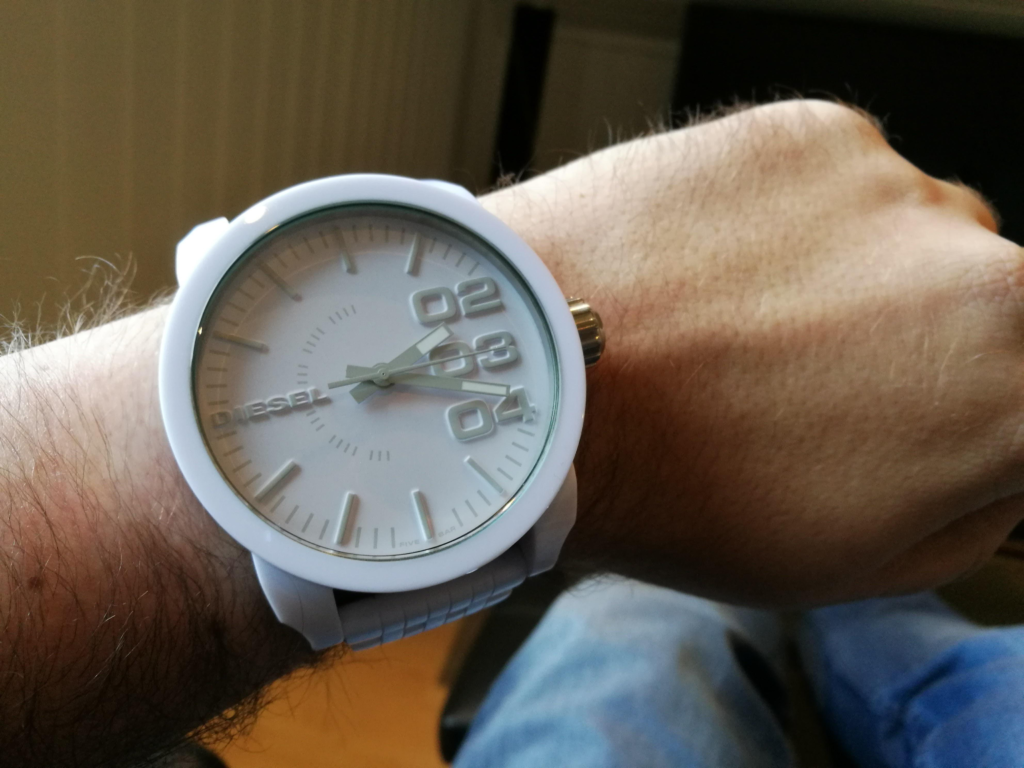
Too large: Lug-to-lug extends beyond your wrist.
| Wrist Circumference | Ideal Lug-to-Lug |
| Under 15 cm (6.0″) | 42 to 45 mm |
| 15 to 16 cm (6.0–6.3″) | 44 to 46 mm |
| 16 to 17 cm (6.3–6.7″) | 45 to 48 mm |
| 17 to 18 cm (6.7–7.1″) | 47 to 50 mm |
| 18 to 19 cm (7.1–7.5″) | 49 to 52 mm |
| Over 19 cm (7.5″+) | 51 mm+ |
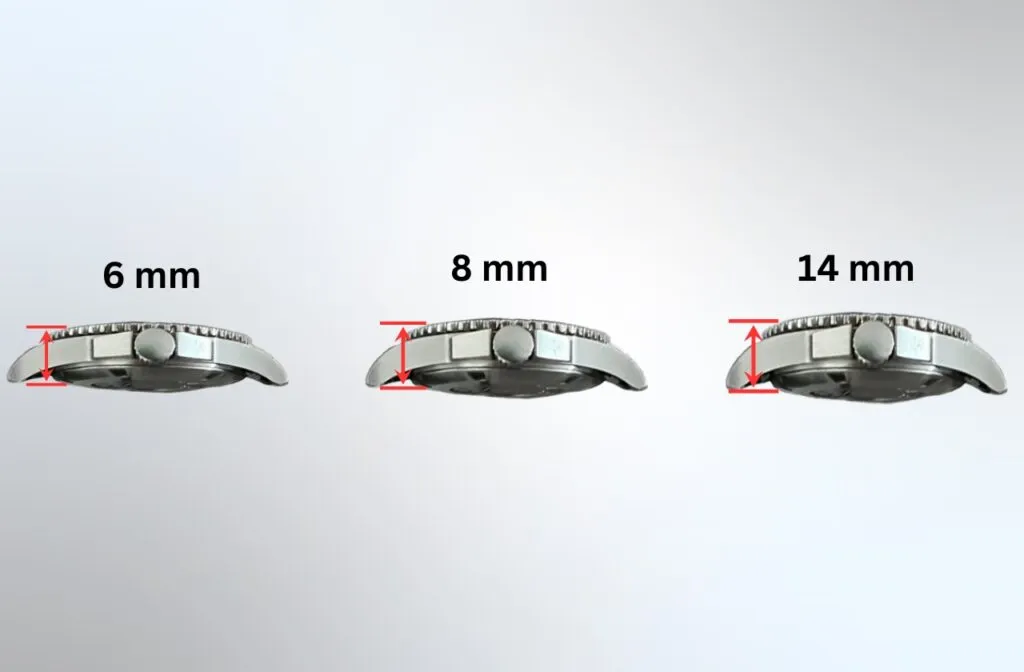
Thickness
The height of the watch case from the case back to the top of the crystal. Thinner watches are generally more comfortable and slide more easily under a shirt cuff.
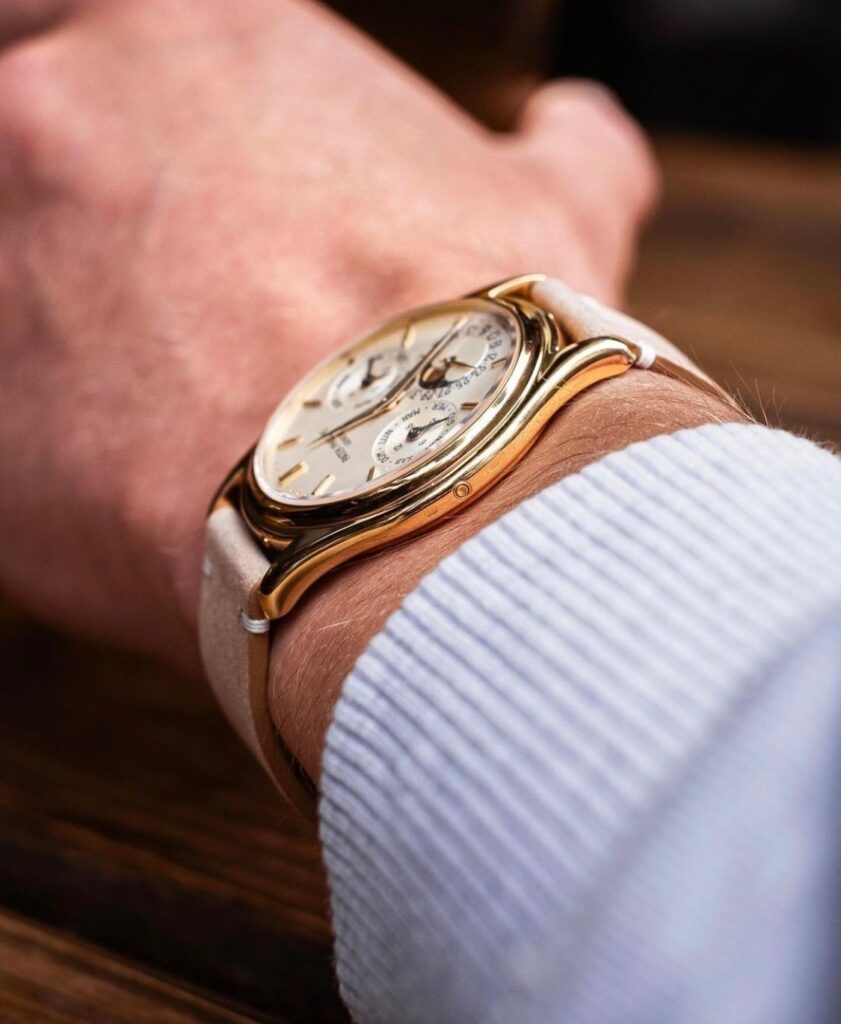
Thin movements are more difficult to engineer because all the components must fit into less vertical space while remaining accurate and reliable. This requires greater precision and more advanced manufacturing.
General recommendations
- Dress: 6 to 10 mm
- Everyday: 9 to 11.5 mm
- Dive: 11 to 13.5 mm
Rule of thumb
- Under 10 mm: Elegant and slips easily under a shirt cuff.
- 10 to 12 mm: Best balance of comfort and durability.
- Over 14 mm: Usually bulky and less comfortable for everyday wear.
Examples very thick watches:
[smartslider3 slider=”5″]
Choose the movement
Quartz
It’s battery-powered movement focused on accuracy and reliability.
Service: Battery replacement every 2 to 5 years
Quietness: Silent
Average Accuracy: ±15 sec/month
Top Accuracy: ±5 sec/year
Pros
- Most accurate
- Affordable
- Durable
- Low maintenance
Cons
- Not as smooth as automatic and mechanical watches
Why it’s so hated by some watch enthusiasts?
Common reasons include:
- Less traditional
- Viewed as less prestigious
- Lacks the craftsmanship of mechanical movements
- Considered “soulless” by some collectors
The hate is forced and overblown.
Watch enthusiasts are less than 1% of the population, and most of them are men.
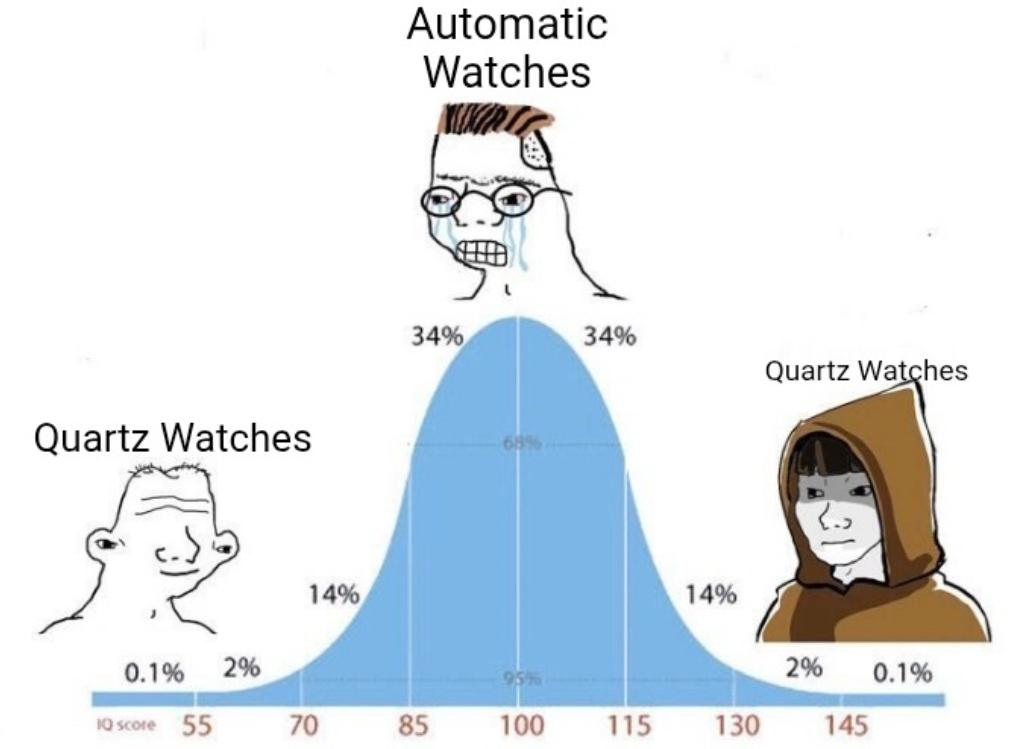
Most people can’t tell what movement your watch uses just by looking at it. You’ll mostly see this kind of criticism on the internet. And if someone does criticize your quartz watch, who cares?
Solar
It’s quartz movement powered by light.
It’s a watch that you definitely would want to have in post apocalypsis world.
Quietness: Silent (ticks once per second)
Average Accuracy: ±15 sec/month
Top Accuracy: ±5 sec/year
Pros
- No regular battery changes
- Highly accurate
- Durable
- Very low maintenance
Cons
- Slightly more expensive than quartz
- Fewer models available
- Not as smooth as automatic and mechanical watches
- Needs occasional light exposure
Service: Battery replacement usually takes 10 to 20+ years before the rechargeable cell may need replacement
Automatic
It’s self-winding mechanical movement powered by the motion of your wrist.
Service: Every 5 to 10 years
Quietness: Nearly silent
Average Accuracy: ±10 to 20 sec/day
Power Reserve: Usually 40 to 50 hours without being worn.
Top-Tier Movements
Top Accuracy: ±0 to 2 sec/day
Power Reserve: 100+ hours
Pros
- No battery
- Traditional craftsmanship
- Smooth sweeping seconds hand
Cons
- Less accurate
- Requires servicing (usually expensive)
- Sensitive to shocks
- Stops after 40 to 50 hours if not worn
At first, it sounds amazing: no battery, your wrist powers the watch just by wearing it. In reality, automatic watches are less accurate, require regular servicing, and stop running if left unworn for a few days.
Even a cheap Dora the Explorer quartz watch is typically more accurate than a $22,400 automatic watch.
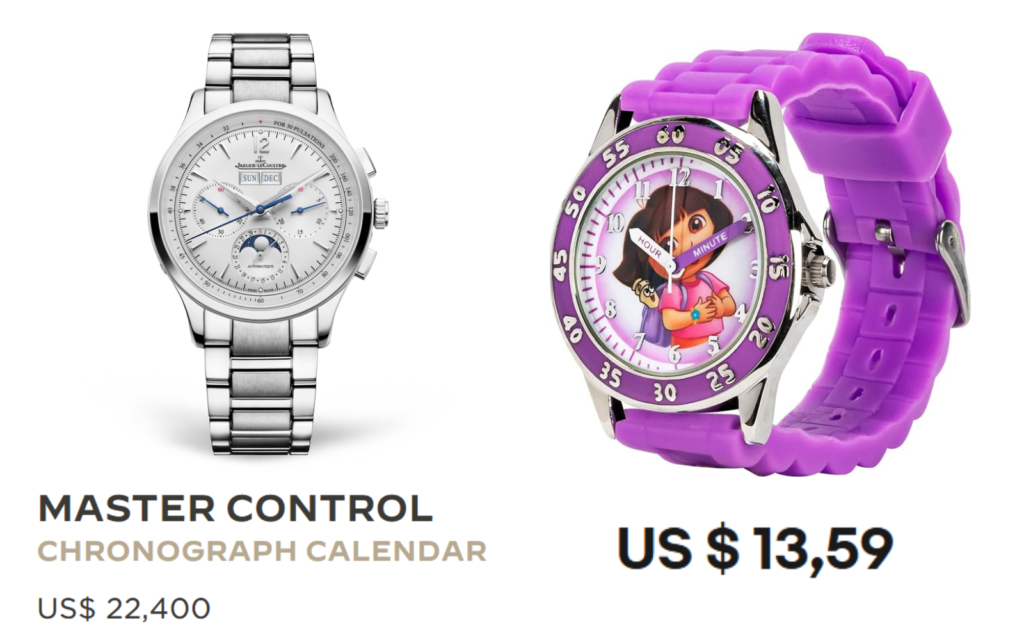
Comparison:
- $20 quartz: about ±15 seconds/month (≈ ±180 seconds/year)
- $20,000 automatic: often ±1 to 5 seconds/day (≈ ±365 to 1,825 seconds/year)
This is one of the biggest ironies of watchmaking: you pay more for craftsmanship, finishing, history, and engineering, not for better accuracy.
Mechanical
Description: Hand-wound movement powered by manually winding the crown.
Pros
- Traditional craftsmanship
- No battery
- Smooth sweeping seconds hand
Cons
- Requires manual winding
- Least accurate
- Requires servicing
Quietness: Nearly silent
Average Accuracy: ±10 to 20 sec/day
Top Accuracy: ±0 to 2 sec/day
Case Materials
316L Stainless Steel
The industry standard used by most watch brands.
Pros
- Excellent corrosion resistance
- Durable
- Affordable
- Easy to polish
Cons
- Heavier than titanium
- Scratches over time
904L Stainless Steel (Oystersteel)
Used by Rolex and a few other manufacturers.
Pros
- Better corrosion resistance than 316L
- Brighter polish
Cons
- More expensive
- Little practical advantage over 316L
Titanium
Grade 2 Titanium
Commercially pure titanium.
Pros
- Very lightweight
- Excellent corrosion resistance
- Hypoallergenic
Cons
- Scratches more easily than steel
- Softer than Grade 5
Grade 5 Titanium (Ti-6Al-4V)
A titanium alloy commonly used in aerospace.
Pros
- Stronger than Grade 2
- Better scratch resistance
- Allows finer finishing
Cons
- More expensive
Ceramic
Solid ceramic cases are made entirely from ceramic, not coated metal.
Pros
- Extremely scratch resistant
- Lightweight
- Corrosion resistant
- Won’t fade
Cons
- Can crack or shatter under a hard impact
- Expensive to repair
Precious Metals
Show materials
Gold
Available in yellow, white, and rose gold.
Pros
- Premium appearance
- Corrosion resistant
- Valuable material
Cons
- Expensive
- Softer than steel
- Heavy
Platinum
The rarest commonly used watch metal.
Pros
- Extremely durable
- Dense, premium feel
- Naturally white
Cons
- Very expensive
- Extremely heavy
Silver
Rarely used for modern watch cases because it tarnishes.
Pros
- Bright appearance
- Precious metal
Cons
- Tarnishes over time
- Softer than steel
- Rare in modern watches
Diamond-Set Watches
Watches with diamonds set into the case, bezel, or dial.
Pros
- Luxurious appearance
- High visual impact
- Available from many luxury brands
Cons
- Significantly more expensive
- Less versatile than standard models
- Looks bold and overly flashy
- Depreciates like crazy
Niche Materials
Show materials
Carbon Fiber / Forged Carbon
Used primarily in modern sports and luxury watches where low weight and high strength are priorities.
Pros
- Extremely lightweight
- Strong
- Unique appearance
- Corrosion resistant
Cons
- Expensive
- Limited availability
- Mostly found on sports watches
Bronze
Develops a natural patina over time, giving every watch a unique appearance.
Pros
- Unique aging process
- Corrosion resistant
- Distinctive look
Cons
- Can discolor skin
- Requires occasional cleaning if you dislike patina
- Limited versatility